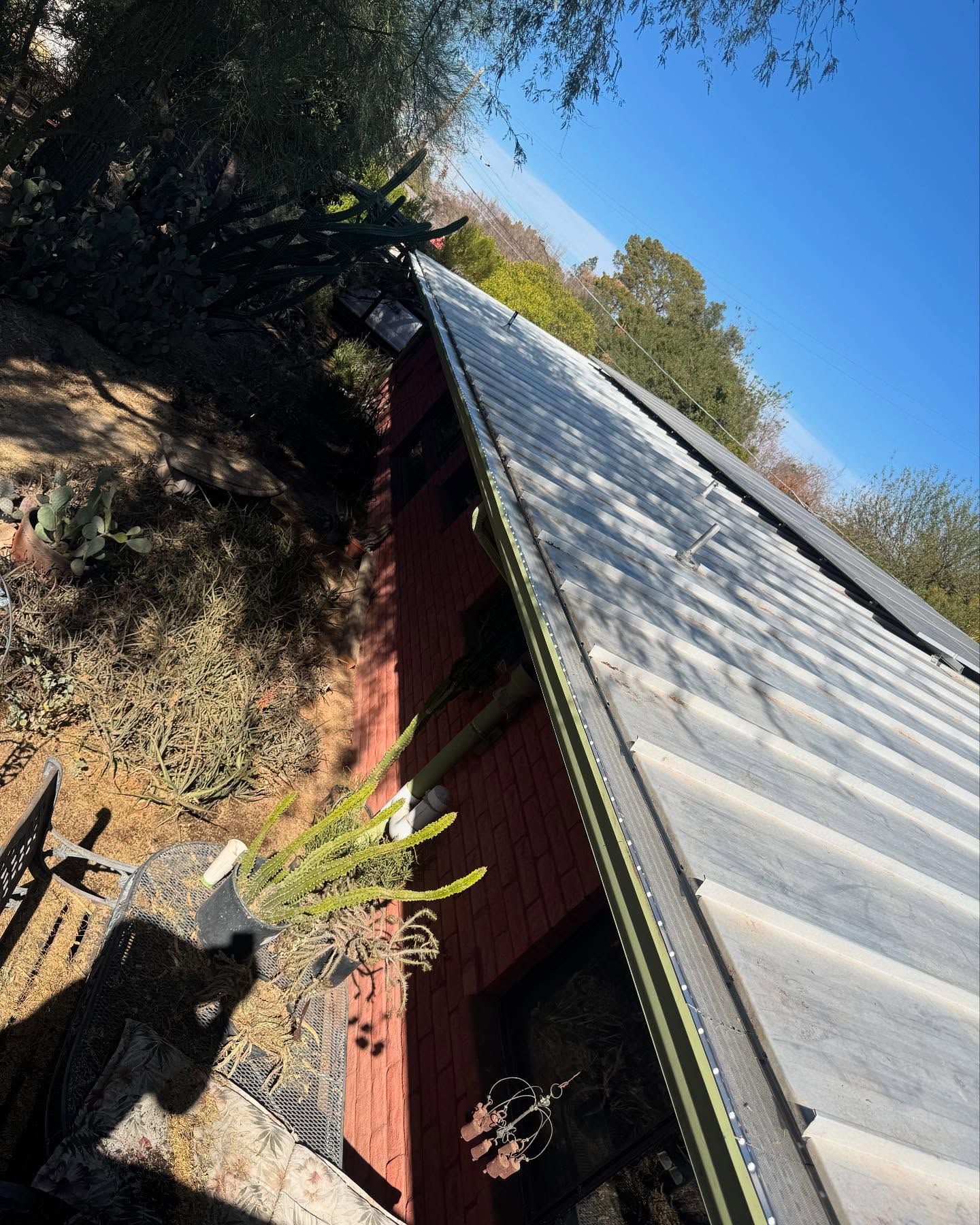

Covers That Match Your Debris Conditions
Gutter Guard & Protection Systems in Phoenix for Properties Dealing With Fine Needles, Oak Leaves, or Constant Desert Wind-Blown Material
Fine pine needles slip through standard screen guards and settle into channel bottoms where they mat and block flow. MNM Gutters LLC compares micro-mesh systems designed for needle-sized debris, screen guards that handle larger oak and citrus leaves, and surface-tension covers that shed material over a curved edge while directing water inward. Selection depends on roof type, surrounding tree species, and whether you prefer reduced maintenance or complete elimination of cleaning visits.
Micro-mesh guards use surgical-grade stainless steel or powder-coated aluminum with hole sizes measured in microns, blocking everything except water while allowing fine dust to wash across the surface during rainfall. Screen guards feature larger perforations suitable for properties with deciduous trees that drop broader leaves, and they install directly over existing channels without requiring removal. Surface-tension designs curve water around a nose piece while leaves and twigs slide off the edge, though they require specific roofline angles to function correctly and may not suit all architectural profiles.
Arrange a property assessment to compare how each system addresses your specific debris sources and maintenance expectations.
What Proper Guard Selection Requires
Choosing the right system requires matching guard design to debris size and volume rather than assuming one product handles all conditions. Properties surrounded by mature pines benefit from micro-mesh that excludes needle penetration, while homes near oak or ash trees may find that screen guards offer adequate protection without the higher cost of ultra-fine filtration. Surface-tension covers work best on steep roof pitches where gravity assists material shedding and where overhanging branches do not deposit debris directly onto the curved surface.
After installation, you notice reduced cleaning frequency though no system completely eliminates maintenance. Micro-mesh requires occasional rinsing to clear dust films that can reduce water entry during light rains, and screen guards may need annual surface brushing to remove material caught on top of the mesh. Surface-tension covers shed most debris automatically but should be inspected annually to confirm water entry slots remain unobstructed and mounting brackets stay secure.
Guard systems do not correct existing slope problems, repair separated seams, or address undersized gutters that overflow regardless of protection. These issues should be resolved before installation so the system performs as designed. Some products void warranties if installed over damaged or improperly pitched channels, making pre-installation inspection valuable for avoiding future disputes over coverage.
What Property Owners Usually Ask
Homeowners evaluating protection options want to know how systems differ and what maintenance remains after installation.
What is the difference between micro-mesh and screen guards?
Micro-mesh blocks debris as small as pine needles and roof grit through micron-sized perforations, while screen guards use larger openings that stop leaves and twigs but allow finer material to enter channels.
How do surface-tension covers work?
Water adheres to a curved metal surface and follows it into a narrow entry slot while leaves and debris lack the adhesion to make the turn and instead fall off the front edge to the ground below.
Do guards eliminate all gutter cleaning?
No system removes the need for maintenance entirely, though properly matched guards reduce cleaning frequency from multiple times per year to occasional inspections and surface rinsing.
Which system works best in Phoenix with surrounding citrus and palo verde trees?
Citrus leaves are broad enough for screen guards to handle effectively, while palo verde produces fine seed pods that may require micro-mesh if volume is high and wind regularly deposits material onto the roof.
Can guards be installed on existing gutters?
Most systems attach to channels already in place as long as they are structurally sound, properly pitched, and free of significant rust or separation that would compromise mounting stability.
MNM Gutters LLC evaluates your property's debris conditions, roof pitch, and tree coverage to recommend the guard type that balances cost, performance, and maintenance reduction. Request a comparison visit to see samples and discuss which system aligns with your expectations.